
Sourcing Services
Quality Inspection China: Check Goods Before You Pay
Our quality inspection China service checks your goods in the factory, before the balance is paid and before they leave the country. Scope, timing and acceptance criteria are agreed before production begins.
- Criteria agreed before production
- Checked against the approved sample
- Photo and video evidence
The Buyer Problem
Assurances are not evidence
A supplier's message that production is finished and quality is fine is an assurance, not evidence. Without an agreed check, a buyer pays the balance, the goods ship, and any mismatch with the specification is discovered in a warehouse in another country, where rework, returns and refunds are slow, costly or impractical.
Inspection coordination gives you evidence at the point where it still matters: in China, before the balance is paid and before the goods leave. VECTA GLOBAL coordinates the inspection, and where agreed it is carried out in person. Findings are reported with photographs or video, referenced against the approved sample and the agreed criteria, so your acceptance decision rests on what was actually checked.
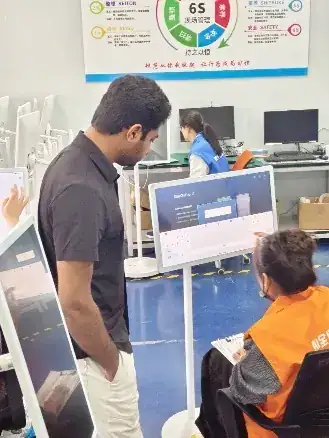
Inspection Stages
Types of quality inspection China buyers use
Inspection is not a single event at the end of production. Different checks catch different problems, and the earlier a problem is found, the cheaper it is to fix. These are the main inspection types and when each one makes sense.
Pre-production inspection
Done before mass production starts. It confirms that raw materials, components and packaging materials match the specification and the approved sample. It is especially useful for a new supplier or a product with critical materials, because a wrong material caught here costs almost nothing to correct.
During-production inspection
Done when part of the order has been produced, often somewhere between the first units and the midpoint. It checks early output against the approved sample and gives the factory time to correct the process while most of the order is still to be made.
Pre-shipment inspection
The most common check. It is done when production is complete and most of the goods are packed. A random sample is taken from the finished lot and checked for appearance, dimensions, function, labelling and packing. The result is what your balance payment should depend on.
Container loading check
Done while goods are loaded for shipping. It confirms the right quantity of the right cartons goes into the container, that cartons are in good condition, and that the load is secured. It protects against short shipment or mixed-up cartons after an inspection has passed.
Sampling Explained
How AQL sampling works
Opening every unit of a large order is slow and expensive, so most quality inspection China programmes use random sampling based on an Acceptance Quality Limit, or AQL. The method comes from the international standard ISO 2859-1, which sets how many units to check for a given lot size and how many defects are allowed before the lot is rejected.
Defects are usually sorted into three classes, and each class gets its own limit. The figures below are common starting points, not fixed rules. The right limits depend on your product, your market and your customers.
| Defect class | What it means | Typical limit |
|---|---|---|
| Critical | Could harm the user or breaks a legal or safety rule | Zero tolerance |
| Major | Likely to cause a return or complaint, or makes the product unusable as intended | Often AQL 2.5 |
| Minor | Small cosmetic issue that does not affect use | Often AQL 4.0 |
The key point is timing. AQL limits and the defect list should be agreed with the supplier before production starts, written into the order, and referenced at inspection. If they are decided only after a problem appears, the inspection turns into an argument instead of a check.
Your Report
What a quality inspection China report covers
A report is only useful if it helps you decide what to do next. Ours are written in plain English with photos or video, and they reference the approved sample and the agreed criteria rather than general impressions. A typical report includes:
- Order details: supplier, product, order number, quantity and inspection date
- Quantity check: how many units are finished and packed compared with the order
- Sample size and AQL result: how many units were checked and whether the lot passed
- Defect list: each defect found, its class and how often it appeared, with photos
- Measurements and function tests: results against the specification and approved sample
- Packaging and labelling: retail packaging, barcodes, carton markings and carton condition
- Overall conclusion: pass, fail or pending, with clear next steps
The report is shared with you before the balance decision, so you can accept the goods, ask for rework, or hold the shipment while you still have leverage.
What Is Included
Agreed before production, checked before payment
An inspection arranged after production is too late to define. The plan is set early.
Inspection plan before production
Scope, timing and acceptance criteria documented in advance, built from the specification sheet and the approved sample.
Timing options
Pre-production, during-production or pre-shipment checks, depending on the agreed scope and the risk of the product.
Checks against the approved sample
Appearance, dimensions, function, materials, labelling and packaging compared with the reference sample and specification.
Quantity and packing checks
Counts, carton condition, markings and packing method checked as part of the agreed scope.
Documented report
Written findings with photo or video evidence, defects recorded against the criteria, shared before the balance decision.
Follow-up communication
Results and corrective-action requests sent to the supplier, with re-inspection arranged where the scope provides for it.
Choosing a Stage
Which inspection does your order need?
Most orders need a pre-shipment inspection as a minimum. Earlier checks are worth adding when the risk is higher. This table is a practical guide we use during scoping.
| Order situation | Suggested inspections |
|---|---|
| Repeat order, stable product, trusted supplier | Pre-shipment inspection |
| First order with a new supplier | During-production and pre-shipment inspection |
| Custom or OEM product, new tooling | Pre-production, during-production and pre-shipment |
| High-value goods or several product lines in one container | Pre-shipment inspection plus container loading check |
| Previous order had quality problems | During-production check, pre-shipment inspection and re-inspection if needed |
We recommend a plan based on your product and supplier history, and explain the cost and benefit of each stage, so you choose the level of checking that fits the order.
When It Fails
What happens if goods fail inspection
A failed result is not the end of the order. It is the reason the inspection exists. When defects exceed the agreed limits, we share the report with you and the supplier, ask the supplier for the cause and a written corrective plan, and set out your options.
- Rework: the supplier sorts and repairs or replaces defective units, then the lot is checked again
- Partial shipment: passed goods ship while the rest is corrected, if your contract and timing allow
- Price adjustment: for minor issues you can accept, a written discount agreed with the supplier
- Hold: the balance stays unpaid and the goods stay in China until the problem is solved
Because the balance has not been paid, the supplier has a clear reason to fix the problem. This is the practical value of quality inspection China buyers schedule before payment rather than after arrival.
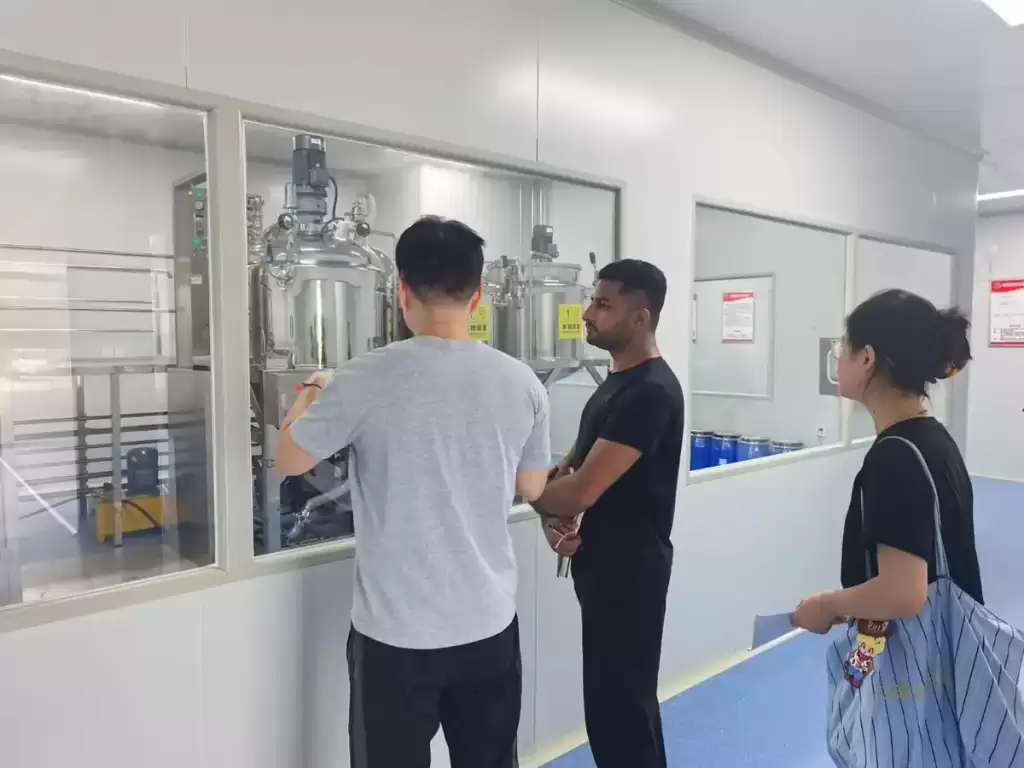
Know the Limits
Inspection is not laboratory testing
A factory inspection checks what can be seen, measured and operated on site: appearance, dimensions, function, quantity, labelling and packing. It does not analyse material composition, chemical content or electrical safety in a laboratory.
If your market requires laboratory testing or certification, for example for electrical products, toys, cosmetics or food-contact items, that testing is arranged separately with an accredited laboratory. We can help coordinate sample collection for testing, but the test scope and the certificate requirements for your market are yours to confirm.
Avoid These
Common inspection mistakes
- Booking the inspection too late. If criteria are set after production, the supplier can reasonably dispute them.
- Relying on the factory's own QC report. It is useful information, but it is not an independent check.
- Inspecting before goods are packed. Packing errors and carton damage are missed if the lot is not ready.
- Paying the balance before reading the report. Once the money is sent, your leverage is mostly gone.
- No approved sample to compare against. Without a reference, "good quality" becomes a matter of opinion.
Getting Started
What we need to plan an inspection
A good inspection plan is built from documents you already have. To prepare one, we ask for:
- The approved sample record and specification sheet
- The order quantity, packing method and carton marking requirements
- Any defects you consider critical for your customers or market
- Your preferred inspection stages and the planned ship date
- Contact details for the supplier and the production address
From these we draft the checklist and the acceptance criteria, share them with you for approval, and confirm them with the supplier before production starts. That way every party knows in advance what a pass looks like.
Process
How it fits the process
Inspection sits inside step five: Send Requirement, Agree Scope, Research Suppliers, Review Samples, Production & Inspection, Coordinate Shipping. The criteria are defined when the order is placed, the check happens during or at the end of production, and the result gates the next steps. Balance payment and shipment should follow acceptance, not come before it.
Inspection can also be booked on its own for an order you are managing yourself. See How It Works for the full sequence, and Production Follow-Up for how milestones are coordinated around the inspection date.
Often Overlooked
Why packaging checks matter as much as the product
Many shipment problems have nothing to do with the product itself. A wrong barcode can stop goods at a retailer's warehouse, a missing warning label can block customs clearance, and weak cartons can crush a perfect product on the way to you.
That is why our checks include retail packaging, inserts, manuals, barcodes, warning labels and carton markings, as well as carton strength and the way goods are packed inside. For buyers selling into retail or online marketplaces, these details often decide whether stock can be sold on arrival or must be relabelled first.
Limitations
Important: An inspection covers the agreed scope only: the stages, items and criteria documented in the plan. It cannot guarantee every unit is defect-free, and it does not check characteristics that were not in the agreed criteria.
Most inspections sample from a batch rather than opening every unit, so a passed inspection reduces risk without removing it. Laboratory testing and certification are separate scope at your cost. Corrective work and rework remain the supplier's responsibility; VECTA reports findings and coordinates the response, but does not manufacture or repair goods. If no inspection is agreed for an order, goods ship on the supplier's assurances alone.
FAQ
Frequently asked questions
When should a pre-shipment inspection be booked?
When production is complete and most of the goods are packed. We confirm the ready date with the supplier and schedule the check before the balance is due.
Do you inspect every unit?
Usually not. Most inspections use AQL random sampling. Full inspection of every unit can be arranged for small or high-value orders if the scope includes it.
Who pays for re-inspection?
That depends on what was agreed with the supplier. We recommend writing into the order that the supplier covers re-inspection costs after a failed result.
Can you inspect goods from a supplier you did not source?
Yes. Send us the order details, the approved sample record and the supplier contact, and we can plan the inspection.
Will I see the photos myself?
Yes. Photos and video are part of the report, so you can judge the findings yourself rather than relying on a summary.
Related services
Sample & Product Development
The approved sample is the reference standard inspections measure production against.
Procurement & Order Coordination
Production milestones and the payment schedule are coordinated around the inspection result.
Shipping & Freight Coordination
Accepted goods move to forwarder comparison, booking and shipment coordination.
Ready to discuss your project?
Tell us about your product and ship date, and we will reply with a quality inspection China plan and the stages we would recommend.