
Sourcing Services
Product Samples from China: Test Before You Commit
We coordinate product samples from China from the first specification sheet to a written approval record. You hold, test and approve the product before any bulk money is committed.
- Specification sheet before sampling
- Revision rounds managed for you
- Written approval record
The Buyer Problem
A quotation cannot show you the product
A supplier can quote accurately and still understand your product differently from you. Materials, finish, dimensions, packaging and labelling all carry assumptions, and assumptions that stay in message threads tend to surface in bulk production, after a deposit is paid and the schedule is set.
Sample coordination closes that gap before bulk money is committed. VECTA GLOBAL agrees a specification sheet with you and the supplier, arranges the sample, manages revision rounds, and records your approval in writing. That approved sample then becomes the reference standard for bulk production and for any later inspection.
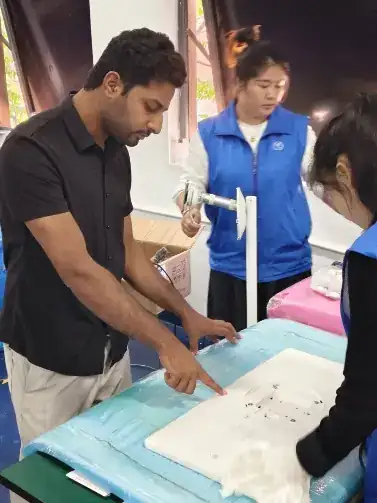
Know What You Are Testing
Types of product samples from China
"Send me a sample" can mean very different things to a factory. Asking for the right type at the right stage saves weeks and avoids approving something that does not represent your order.
Stock or factory sample
An existing product taken from the supplier's range. It is quick and cheap, and it shows general build quality, but it will not reflect your custom changes, branding or packaging.
Custom sample
Made to your specification, with your materials, colours or features. This is where most real testing happens, and it often takes more than one round to get right.
Pre-production sample
Made with the materials, equipment and process the factory will use for your bulk order. This is the sample that should be approved before production starts.
Golden sample
The approved pre-production sample, signed and sealed, with one kept by the buyer side and one by the factory. It becomes the physical reference for production and inspection.
Packaging and label sample
Retail boxes, inserts, labels and carton markings sampled alongside the product. Packaging errors are common and costly to fix once thousands of units are printed.
Counter-sample
A sample the factory makes to match a product you supply. Useful when you already sell an item and want a new supplier to reproduce it.
What Is Included
From specification sheet to approved sample
The number of rounds and the depth of development are agreed per project.
Specification sheet
Product, materials, dimensions, colours, function, packaging and labelling recorded in one document the sample is judged against.
Sample arrangement
Request placed with the shortlisted supplier, cost and terms confirmed with you before anything is paid, and dispatch tracked.
Revision rounds
Your feedback translated into clear supplier instructions; each round records what changed and what remains open.
Written approval record
Approval recorded in writing against the specification sheet, including any deviations you accepted.
Reference standard
The approved sample and its record kept as the reference for bulk production and pre-shipment checks.
Packaging & label checks
Where the scope includes it, packaging and label samples are reviewed with the product, as in past healthcare and food-powder projects.
Our Method
How sample coordination works
1. Write the specification sheet
Before any sample is requested, we agree one document with you that lists materials, dimensions and tolerances, colours with reference codes where possible, functions, accessories, packaging and labelling. The factory quotes and samples against this sheet, not against a chat history.
2. Request and confirm terms
We ask each shortlisted supplier for a sample, confirm the sample fee, the lead time and the courier cost, and check whether the fee is credited against a later bulk order. You approve these terms before anything is paid.
3. Inspect in China first
Where the scope allows, we check the sample in China before it travels. Obvious mistakes, such as the wrong colour or a missing accessory, are sent back for correction immediately instead of after a week in transit.
4. You test it
You receive the sample and test it the way your customers will use it. We give you a short evaluation checklist so feedback is specific and measurable.
5. Revise and record
Your feedback is translated into clear supplier instructions in Chinese. Each round is logged with what changed, what was retested and what is still open, so nothing is lost between rounds.
6. Approve in writing
When the sample is right, the approval is recorded against the specification sheet, including any deviations you accepted. The approved sample becomes the golden sample for production.
Costs
Who pays for samples, and what affects the price
Most suppliers charge for product samples from China, and that is normal. A sample fee covers real material and labour, and it filters out buyers who are not serious. Free samples do exist for simple stock items, but courier costs are usually still paid by the buyer.
| Factor | Effect on sample cost |
|---|---|
| Stock item vs custom item | Custom work costs more because the factory sets up for one unit |
| New tooling or moulds | Can add significant cost and time before the first sample exists |
| Branding and packaging | Printed logos, custom boxes and labels each add setup cost |
| Number of revision rounds | Each round can carry its own fee and courier charge |
| Courier route and weight | Express shipping for one parcel is expensive per kilogram |
We confirm every cost in writing before you pay, and we ask suppliers whether the sample fee will be refunded or credited if you place a bulk order. That answer differs between factories, so it is worth asking early.
Evaluation
How to evaluate product samples from China
When a sample arrives, the temptation is to look at it, decide it seems fine and move on. A structured check takes a little longer and gives the factory feedback it can actually act on.
- Dimensions and weight measured against the specification sheet, not judged by eye
- Materials and finish including colour under daylight, surface texture and coating
- Function and durability tested the way your customers will use the product
- Accessories and manuals present, correct and in the right language
- Packaging and labels including barcodes, warnings and carton markings for your market
- Safety and compliance points your market requires, noted for separate testing where needed
Write your findings down with photos and measurements. Vague feedback such as "make it better" produces a second sample that is different, not necessarily closer to what you need.
Logistics
Shipping samples to your country
Samples usually travel by international express courier because they are small and time matters. A few practical points help them arrive without delay:
- Declare the sample with an accurate description and a realistic value, because customs can hold parcels with unclear paperwork
- Ask about restrictions early for products with batteries, liquids, powders or magnets, which some couriers limit
- Combine samples from several suppliers into one parcel where possible to reduce courier cost
- Keep the tracking number and photos of the packed parcel in case anything is damaged in transit
When we receive product samples from China at our end before forwarding, we photograph each one on arrival, so you have a record of its condition before it travels to you.
Protect Your Design
Samples and intellectual property
Sharing drawings and a custom sample with a factory exposes your design. Basic steps reduce that risk: share only what each supplier needs to quote, use a written non-disclosure and non-use agreement before sending detailed files, and consider registering your trademark in China before production. The World Intellectual Property Organization has useful general guidance on protecting designs internationally.
We are not lawyers and do not give legal advice, but we keep design files limited to the suppliers that need them and record what was shared with whom.
Sample vs Bulk
Why a good sample is not the end of the job
A supplier can make one excellent sample by hand and still struggle to repeat it across thousands of units. Materials may be switched for cheaper alternatives, a different production line may be used, or staff who made the sample may not work on your order.
That is why the approved sample is sealed and kept as a reference, why the order contract should name it, and why production follow-up and inspection are separate stages. The sample proves the product is possible; inspection confirms the bulk order matches it.
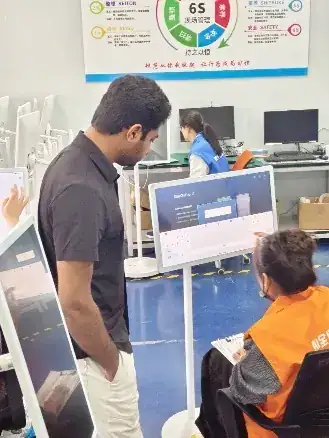
Process
How it fits the process
Sampling is step four: Send Requirement, Agree Scope, Research Suppliers, Review Samples, Production & Inspection, Coordinate Shipping. It follows supplier research, because sampling from a screened supplier is more useful than sampling at random, and it comes before procurement, because the order contract should reference the approved sample and specification. See How It Works, and our guide on what to confirm before approving a sample.
Avoid These
Common sampling mistakes
Most sampling problems are avoidable. These are the ones we see buyers make most often when they handle sampling alone:
- Approving from photos. Photos hide texture, weight, smell and build quality. Hold the product before you approve it.
- Changing several things at once. When five changes go into one round, it is hard to tell which one caused a new problem.
- Forgetting the packaging. A perfect product in the wrong box, or with the wrong barcode, can still stop a shipment.
- No written approval. If the approval is only a chat message, the factory has nothing fixed to produce against.
- Sampling from one supplier only. Without a comparison, it is hard to know whether a sample is good or just acceptable.
Each of these is cheap to avoid at the sample stage and expensive to fix once bulk production has started.
Timing
How long sampling takes
Timing depends on whether the product already exists, whether new tooling is needed, how many revision rounds are required and how long the courier takes to reach your country. A stock sample can move quickly, while a fully custom, branded product takes longer. We give you an estimated timeline once the specification is agreed, and we update it after each round so your launch plans stay realistic.
Limitations
Important: An approved sample proves a supplier can make one unit to specification under sample conditions. It does not guarantee that every unit in bulk production will match it, which is why production follow-up and inspection exist as separate stages.
Sample costs and timing are set by the supplier and vary by product. Testing and certification for your market are your responsibility to specify and, where needed, are arranged as separate scope at your cost. Revision rounds beyond the agreed number are agreed separately, and skipping the sample stage entirely increases the risk carried into production.
FAQ
Frequently asked questions
How many sample rounds are normal?
Simple stock items often need one. Custom and branded products commonly need two or three before everything is right. The number included is agreed during scoping.
Can I get samples from several suppliers at once?
Yes, and it is often the best way to compare. We request samples from the shortlisted suppliers in parallel so you can judge them side by side.
Will the sample fee be refunded?
Some suppliers credit it against a bulk order, others do not. We confirm the supplier's terms in writing before you pay.
Can you check the sample before it ships to me?
Where the scope allows, yes. Checking in China first catches obvious mistakes and saves a courier round trip.
What if the bulk order does not match the sample?
The approved sample and written record are the basis for raising the problem with the supplier. Inspection before the balance payment is the stage designed to catch it.
Related services
Supplier Research & Evaluation
The shortlist comes first: sample from a supplier whose identity and capability have been screened.
OEM & ODM Sourcing
For branded or customized products, sampling is where branding, packaging and tooling are confirmed.
Procurement & Order Coordination
After approval, the order is coordinated against the approved sample and specification sheet.
Ready to discuss your project?
Send your specification or a reference product, and we will reply with a plan for sourcing and testing product samples from China.