
Blog
China Sourcing Blog: Practical Guides for B2B Buyers
The VECTA GLOBAL China sourcing blog shares practical guides for importers and brands: choosing a sourcing agent, verifying suppliers, comparing quotations, approving samples and understanding what an order really costs.
- Written for B2B buyers
- No invented figures
- Based on real sourcing work
About This Blog
How to use this China sourcing blog
Every guide here answers a question buyers ask us during real projects. They are written to be used, not just read: most include checklists, comparison tables and the questions to ask suppliers. If you are new to buying from China, start with the workflow guide and follow the links from there. If you already import, jump to the topic you need.
We keep this China sourcing blog honest. We do not publish invented prices, made-up statistics or case studies without client approval. Where something depends on your product or market, we say so and explain what to check.
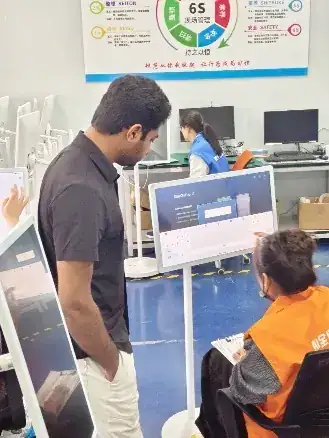
Quality Control in China: What Every Importer Needs to Know
The five stages of inspection, how AQL sampling really works, and what to write into your purchase order so goods are checked before they leave the factory.
How to Buy from Taobao in the USA: Using a Taobao Agent
Taobao does not ship directly to most US addresses. How a Taobao agent works, how fees and duties add up, and when to move to buying from the manufacturer.
Understanding MOQ, Lead Time, Freight and Import Costs from China
How MOQ, production lead time, freight and import charges each work, how they interact, and what to confirm before ordering so the landed cost holds no surprises.
What to Confirm When Approving Product Samples China Suppliers Send
Specifications, materials, packaging and labelling to check before you approve a sample, and the written approval record that protects your bulk order.
Factory vs Trading Company China: What B2B Buyers Should Know
How to tell a real manufacturer from a trading company, why the distinction matters for verification and negotiation, and when a trading company is the right choice.
How to Source Products from China: A Practical Workflow
The end-to-end workflow in six steps, from sending your requirement to coordinating shipping, with what to provide, what happens, and what to confirm at each stage.
How to Compare Supplier Quotations China Factories Send
Why the lowest unit price often costs more: how to normalise specifications, MOQ, tooling, packaging, payment terms, Incoterms and freight before you decide.
China Sourcing Agent Cost: How Much Agents Charge
The common sourcing-agent fee models explained, commission, flat fee, retainer, plus what drives project cost and which fee questions to settle in writing.
How to Verify Chinese Supplier Details Before You Pay
Practical checks before paying a deposit: business identity, manufacturing role, samples, payment safeguards, and an honest note on what no checklist can do.
How to Find a China Sourcing Agent for Your Business
What a sourcing agent actually does, how the main fee models work, which questions to ask before you agree to anything, and warning signs worth taking seriously.
Start Here
China sourcing blog guides by topic
Pick the topic closest to your current question. Each guide links to the next one you are likely to need.
Choosing a sourcing partner
How to Find a China Sourcing Agent for Your Business
Where to look, how to shortlist, what to ask, and what to put in the agreement.
China Sourcing Agent Cost: How Much Agents Charge
The four fee models, what is included and extra, and how to compare agent quotes.
Factory vs Trading Company China
How to tell manufacturers and traders apart, and when each is the better choice.
Checking suppliers and quotes
How to Verify Chinese Supplier Details Before You Pay
Business licence checks, documents, certificates, factory calls and payment safeguards.
How to Compare Supplier Quotations China Factories Send
A comparison template, Incoterms, payment terms, tooling and negotiation.
Process, samples and costs
How to Source Products from China: A Practical Workflow
The six steps from requirement to shipment, and where orders commonly go wrong.
What to Confirm When Approving Product Samples
Checklists, golden samples, approval records, packaging and tolerances.
Understanding MOQ, Lead Time, Freight and Import Costs
Landed cost, duties, hidden fees and ways to reduce import costs.
New to importing? Read this China sourcing blog in the order shown: choose a partner, check suppliers and quotes, then work through samples and costs.
Glossary
Sourcing terms explained
Sourcing has its own vocabulary, and a misunderstood term can cost money. These are the words that appear most often in our guides and in supplier quotations.
| Term | Meaning |
|---|---|
| MOQ | Minimum order quantity: the smallest order a supplier will accept, often different for stock and custom products. |
| Incoterms | Standard trade terms published by the International Chamber of Commerce that define where cost and risk pass from seller to buyer. |
| FOB | Free On Board: the seller delivers goods onto the vessel at the named port in China; freight and risk then pass to the buyer. |
| CIF | Cost, Insurance and Freight: the seller pays freight and minimum insurance to the destination port, but risk passes at loading. |
| DDP | Delivered Duty Paid: the seller delivers to your named place with import duties handled on the seller side. |
| EXW | Ex Works: goods are made available at the factory, and the buyer arranges everything from there, including export clearance. |
| AQL | Acceptance Quality Limit: a sampling method that sets how many units to inspect and how many defects are acceptable. |
| Pre-shipment inspection | A check of finished, packed goods before the balance is paid and before they leave the factory. |
| Golden sample | The approved, signed reference sample that bulk production and inspection are measured against. |
| OEM | Original equipment manufacturing: a factory makes a product to your own design and specification. |
| ODM | Original design manufacturing: you adapt a design that the factory already owns. |
| HS code | The Harmonized System classification used by customs to decide the duty rate on a product. |
| Landed cost | The full cost of a unit in your warehouse, including product, freight, duties, taxes and fees. |
| Unified social credit code | The 18-character registration code of a Chinese company, used to check it against official records. |
For the official definitions of delivery terms, see the ICC Incoterms rules.
Key Lessons
Ten lessons that run through every guide
- Write the specification down. Suppliers quote and produce against documents, not conversations.
- Verify before you pay. Check the registered company, not just the website or profile.
- Know who you are dealing with. A factory and a trading company bring different strengths and risks.
- Compare like with like. Put every quotation on the same specification, Incoterm and quantity.
- Treat payment terms as part of the price. When the balance is due matters as much as how much it is.
- Approve samples in writing. A golden sample and an approval record set the standard for bulk.
- Follow production early. Checking the first units off the line catches problems while they are small.
- Inspect before the balance. Once the money is sent, leverage is mostly gone.
- Calculate landed cost. Freight, duties and fees can change whether an order is worth placing.
- Keep records. Every approval, report and document makes the next order faster and safer.
None of these lessons is complicated. The difference between smooth and difficult orders is usually whether they are followed every time.
Common Questions
Questions buyers ask us most
Is it safe to buy directly from Chinese factories?
It can be, with the right checks. Verify the company, see the production, approve a sample in writing and inspect before paying the balance. Our verification guide explains each step.
Do I need a sourcing agent?
Not always. Agents help most with new suppliers, new products and orders where local checks and follow-up matter. Simple repeat orders with a proven supplier may need less help.
Why do quotations for the same product differ so much?
Because they often describe different orders: different materials, packaging, MOQ, delivery terms or exclusions. Our quotation guide shows how to compare them fairly.
How do I know what an order will really cost?
Work out the landed cost: product, packaging, freight, insurance, duties, taxes and destination fees. Our cost guide includes a checklist.
First Order Roadmap
A checklist for your first order from China
If you are preparing a first order, work through this list in order. Each point links back to a guide that explains it in more detail.
- Define your target landed cost, quality level and required arrival date
- Write a specification with materials, sizes, tolerances, packaging and labelling
- Confirm the certifications and labels your market needs for the product
- Build a longlist of suppliers and check each registered company
- Ask every shortlisted supplier to quote on the same basis and compare in one table
- Order samples from two or three suppliers and test them side by side
- Approve one sample in writing and keep it as the golden sample
- Agree the contract, payment schedule, Incoterm and inspection terms in writing
- Follow production, checking the first units off the line
- Inspect before paying the balance, then book freight and track the shipment
Keep every document from these steps in one folder. It becomes the template for every repeat order.
How We Write
How these guides are written
The guides are written from the work VECTA GLOBAL does every day: researching and checking suppliers, coordinating samples, following production, arranging inspections and coordinating shipping. Founder Ahmed Rizwan is based in China and visits factories in person, and the practical points in each guide come from that work.
We avoid invented prices and statistics, because they go out of date and rarely match a real order. Instead, the guides explain what drives cost and risk, and the questions to ask so you can get accurate answers for your own product. When rules depend on your destination market, we tell you what to confirm and with whom.
Put It Into Practice
Services that match each guide
If you would rather have the work done for you, each guide connects to a service.
Supplier Verification
Registry checks, manufacturer or trader assessment and factory visits before you pay.
Production Follow-Up
Contracts, payment schedules and milestone updates from deposit to dispatch.
Quality Inspection
Pre-production, during-production and pre-shipment checks with photo reports.
Shipping Coordination
Forwarder comparison, documents and tracking on agreed delivery terms.
Who Reads This
Who these guides are for
The guides are written for importers, wholesalers, distributors, retailers, project buyers and product brands that buy in commercial quantities. Many readers are in the UAE, Saudi Arabia, Iraq and the USA, which are among our main markets, but the principles apply wherever you import from China. They assume no prior experience, while still going deep enough to be useful for buyers who already import regularly.
Staying Current
How we keep guides up to date
Sourcing practice changes slowly, but rules, freight conditions and supplier behaviour do shift. We review guides when we see a change in our own projects, such as a new documentation requirement in one of our main markets or a common new type of supplier problem, and update the advice so it stays practical. If you spot something that seems out of date, let us know and we will check it.
Suggest a Topic
What should we write about next?
Most new guides start with a question a buyer asked us. If there is a topic you would like covered in the China sourcing blog, such as a specific product category, a market’s import rules or a step in the process, tell us through the contact page. If your question is about a live project, send it with your product details through the quote request and we will answer directly.
Reading Paths
Where to start, by situation
| Your situation | Start with | Then read |
|---|---|---|
| First order from China | How to Source Products from China | Verifying suppliers, then approving samples |
| Choosing an agent | How to Find a China Sourcing Agent | Agent cost, then Factory vs Trading Company |
| You already have quotes | How to Compare Supplier Quotations | Import costs, then supplier verification |
| Samples have arrived | Approving Product Samples | Quality inspection service page |
| Planning budget and timing | MOQ, Lead Time, Freight and Import Costs | Comparing quotations |
Every guide ends with related reading, so you can keep going without searching.
Avoid These
Mistakes we see most often
- Choosing a supplier on unit price alone, before checking who the company is and what the quote includes
- Approving samples from photos or by chat message, with no written record
- Paying the full amount before production, leaving no leverage if something goes wrong
- Skipping the compliance question until goods are already made
- Ignoring landed cost, so freight and duties turn a good deal into a poor one
- Changing the specification mid-production without written confirmation
Each of these appears in at least one of our guides, with a practical way to avoid it.
Categories
Category guidance
Some sourcing advice is the same for every product; some depends heavily on the category. For category-specific points, see our product pages:
- Electronics & Displays: display specifications, certification, batteries and testing
- Cleaning Products: safety data sheets, labelling, leak-proof packaging and dangerous goods
- OEM & Private Label: branding, packaging, tooling and trademark protection
- Other Product Sourcing: how new categories are assessed for feasibility
Our completed work page shows how these principles were applied on real projects in healthcare products and food and beverage powders.
Market Rules
A note on destination rules
Import rules differ between countries and change over time. Some markets require conformity certification before goods are shipped, others require specific labels, languages or registrations before products can be sold. Our guides point out where these rules matter, but they cannot replace current advice from your customs broker or regulator. Confirm the rules for your product and destination before you order, and ask suppliers early whether they can provide the documents you will need.
Have a sourcing project to discuss?
Send your requirements and we will respond with next steps after a short feasibility review.