
Choosing an Agent
How to Find a China Sourcing Agent for Your Business
Knowing how to find a China sourcing agent who works for you, not for the factory, saves costly mistakes. This guide explains what agents do, how they charge, what to ask and which warning signs to watch for.
What a sourcing agent actually does
A China sourcing agent works on your side of the transaction. Instead of selling you products, the agent performs sourcing tasks on your behalf: researching candidate suppliers, comparing quotations, arranging samples, coordinating communication across languages and time zones, and following up on production and shipping milestones. The supplier invoices you directly for the goods, and the agent charges you separately for the service.
That distinction matters, because it is what separates an agent from a trading company. A trading company buys from the factory and resells to you, so its margin is built into the unit price. An agent’s fee is (or should be) visible to you, which changes the incentives: a well-structured agent arrangement rewards the agent for finding you the right supplier, not the most profitable one. We explain the two working models in more detail on our Sourcing vs Trading page.
How sourcing agents typically charge
Fee structures vary widely between agents, and any specific figure you see quoted online depends on the project. What matters is understanding the models, so you can ask the right questions:
- Commission-based: the agent charges a percentage of the order value. This aligns the agent’s interest with placing your order, but ask whether the fee is calculated on the factory price and whether the agent also receives any payment from the supplier, more on that below.
- Flat project fee: a fixed amount for a defined scope, such as finding three vetted suppliers and negotiating terms. This works best when the deliverables are clearly described in writing.
- Retainer: a recurring fee, usually monthly, for ongoing sourcing or order-management work. This can suit buyers with continuous purchasing needs, where per-order pricing would be unpredictable.
- Trading margin: some companies offer both models and simply act as a trading partner, with their margin included in the product price. That is legitimate, as long as it is stated, not hidden.
Note: We do not publish typical rates here, because “typical” depends on product complexity, order volume, and the amount of on-the-ground work involved. Any agent who quotes a single number before understanding your project has not done enough thinking yet.
How to find a China sourcing agent: questions to ask
A serious agent welcomes detailed questions. Treat evasiveness as information.
Scope of work
- Exactly which tasks are included, supplier search, quotation comparison, sample coordination, factory visits, production follow-up, inspection, shipping coordination?
- What is explicitly not included, and what would cost extra?
- What does the deliverable look like, a supplier comparison sheet, a written report, regular milestone updates?
Fee disclosure
- How is the fee calculated, and on what base, ex-factory value, FOB value, or something else?
- Does the agent receive any commission, rebate, or other payment from the supplier? This is the conflict-of-interest question, and it should be answered in writing.
- When is the fee payable, upfront, in milestones, or on shipment?
Verification practices
- How does the agent verify a supplier’s business registration and whether it actually manufactures the product?
- Can the agent visit the supplier’s facility, and what does a visit report include?
- How are samples handled, who pays, and what happens if a sample fails?
Communication and references
- Who is your day-to-day contact, what languages do they work in, and what are the expected response times?
- Can the agent provide references you can verify independently, not just names on a slide?
Warning signs
No single sign proves an agent is unreliable, but buyers often report that problems started with one of these patterns. Treat them as reasons to slow down and ask harder questions:
- Guaranteed prices or guaranteed outcomes. No agent controls factory costs, freight rates, or exchange rates. Guarantees about things outside their control are a red flag.
- No written scope. If the agreement is vague about what is included, disagreements later are almost certain. A professional agent puts the scope in writing.
- Pressure for large upfront payments. A reasonable deposit or setup fee for defined work is normal; pressure to pay a large sum before any scope exists is not.
- Reluctance to disclose supplier-side payments. An agent who avoids the kickback question may have something to protect.
- No verifiable track record. Claims about years of experience or numbers of clients are easy to make and hard to check, which is exactly why you should check.
- Communication that goes dark. Slow or inconsistent communication before you pay tends to get worse, not better, after you pay.
How VECTA GLOBAL positions its sourcing service
We work in two clearly separated models, so there is no ambiguity about whose interests we represent on a given order:
- As your sourcing agent: we act on your behalf under an agreed scope. Our fee is stated to you separately, and we disclose whether any supplier-side payment exists.
- As a trading partner: we sell to you under a product-supply agreement, where our margin is part of the price, again, stated as a model, not hidden inside a claim of neutrality.
We do not own factories. We work with independent suppliers and partner manufacturers, and we say so plainly, an agent who claims to “own” its supply chain is usually describing a trading relationship. You can read how we think about scope, fees, and verification on the Sourcing vs Trading page and in our process overview.
Bottom line: the right agent is not the cheapest one, it is the one whose scope is written down, whose fees are fully disclosed, and whose verification practices match the size of your risk.
Where to look for sourcing agents
Good agents are rarely found through one search. Most buyers build a list from several sources and then test the candidates carefully.
- Referrals: other importers in your industry are the most reliable source, because they can tell you how an agent behaves when something goes wrong
- Trade fairs: events such as the Canton Fair let you meet agents and suppliers in person
- Industry associations and chambers of commerce in your own country often know agents their members use
- Professional networks: agent profiles, articles and recommendations show how they explain their work
- Search and directories: useful for a longlist, but treat every claim as something to verify
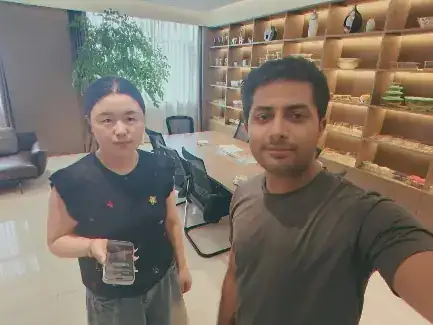
How to find a China sourcing agent: a step-by-step shortlist
Once you have a longlist, the goal is to narrow it to two or three agents you can test. If you are wondering how to find a China sourcing agent you can rely on, this sequence works for most buyers:
- Write a short brief with your product, quantity, destination and the help you need
- Send the same brief to every candidate so the replies are comparable
- Compare how they respond: the questions they ask say more than their marketing
- Ask for the fee model in writing, including what is excluded
- Check the company: registration, real address and who you will work with day to day
- Talk to them on a call and ask them to explain a past project step by step
An agent that asks detailed questions about your specification, market and quality expectations is usually more useful than one that sends a price immediately.
Types of sourcing agents
"Sourcing agent" covers very different businesses. Knowing which type you are talking to helps you judge what they can realistically do.
| Type | Typical strengths | Things to check |
|---|---|---|
| Independent individual agent | Personal attention, flexible, often low cost | Capacity, backup if they are unavailable, written terms |
| Sourcing company | A team, broader coverage, formal processes | Who actually handles your project, and how fees work |
| Buying office for larger buyers | Deep category knowledge, strong supplier networks | Minimum volumes, long-term commitment |
| Trading company describing itself as an agent | Product range, simple invoicing | Whether it earns a margin on goods rather than a fee |
None of these types is automatically better. The right choice depends on your volume, your product and how much support you need.
Test an agent with a small project first
Before trusting an agent with a large order, give them a contained task: verify one supplier, compare three quotations, or manage one sample round. A small project shows how they communicate, how detailed their reports are, and whether they meet the deadlines they promise. It costs far less than finding out on a full production order.
What to put in the agreement
- The exact scope of work, step by step, and what is excluded
- The fee model and amount, and when each payment is due
- A clear statement that the agent receives no payment from suppliers, if that is what was promised
- Who owns the supplier relationship and contact details
- How samples, approvals and inspection results are documented
- Confidentiality of your designs, prices and supplier information
- How either side can end the agreement
A short written agreement covering these points prevents most disputes. If an agent is reluctant to put any of them in writing, treat that as useful information.
Using an agent or doing it yourself
| Factor | Doing it yourself | Using an agent |
|---|---|---|
| Cost | No agent fee, but more of your time | Agent fee, less of your time |
| Language and culture | Harder without Chinese | Questions asked and answered in Chinese |
| Factory checks | Travel or rely on documents | Visits or video checks on the ground |
| Production follow-up | Remote, across time zones | Local contact during production |
| Best for | Simple repeat orders with a trusted supplier | New products, new suppliers, or complex orders |
Many buyers use both: they learn how to find a China sourcing agent for new products and new suppliers, then manage simple repeat orders themselves once the process is proven.
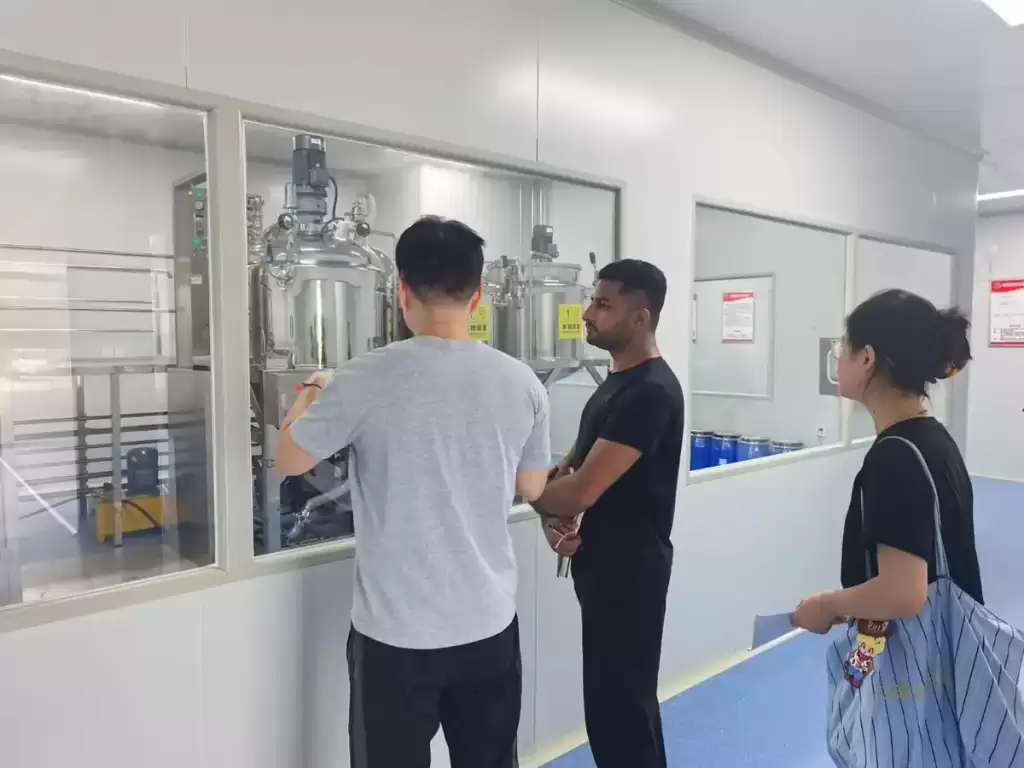
What a good first reply looks like
The first reply to your brief is a useful test. A strong agent usually asks clarifying questions before quoting anything: the material grade, the quantity for the first and repeat orders, the certification your market needs, your target price and how you plan to ship. They explain what they would do first and why, and they are open about what they do not yet know.
A weak reply is often fast and confident: a price within hours, a promise of the best factory, and no questions at all. Speed is not a bad sign by itself, but certainty without questions usually means the agent is guessing, or already has a supplier in mind that pays them.
Match the agent to your market
An agent who mostly serves buyers in one region may not know the rules in yours. Labelling languages, certification marks and import documents vary widely between, for example, the Gulf, the United States and Europe. Ask which markets their clients are in, and how they handle compliance questions for your destination. A good agent will not claim to certify products, but should know which documents to request from suppliers.
How long choosing an agent should take
Allow time for at least one round of written questions, a call, and a small test project. Rushing the choice to meet a production deadline is one of the most common reasons buyers end up with the wrong partner. If timing is tight, start with a narrow task such as verifying a single supplier while you continue evaluating.
Keep reviewing after you choose
Choosing an agent is not a one-time decision. Review the relationship after each order: were updates timely, were problems reported early, did costs match the written fee, and did the goods match the approved sample? Keeping a short record of these points makes it easy to see whether the partnership is working, and gives you clear evidence if something needs to change.
Three qualities that matter most
Real presence in China
Some services that call themselves China-based work remotely, with no one who can visit a factory. Physical presence matters for site checks, in-person inspection and building relationships with suppliers. Ask where the agent is based and who would actually visit a factory on your behalf.
Openness about suppliers
You should know who is making your product, where the factory is, and whether you are dealing with a manufacturer or a trading company. A professional agent shares this rather than treating it as a secret. An agent who will not name the supplier is usually protecting a margin, not your supply chain.
Clear, proactive communication
Sourcing involves constant back-and-forth across time zones. An agent who replies clearly in English, flags problems before you ask, and explains the options is worth more than a cheaper one who leaves you waiting for updates.
Why local negotiation helps
Factories do not always quote every buyer the same way. A foreign buyer writing in English to a supplier they have never worked with often receives a different starting price from a local contact asking in Chinese with a clear specification. Better quotes are not guaranteed, but a well-prepared request from someone on the ground usually leads to more comparable and more realistic pricing.
Test with a real project
The best way to judge an agent is to bring them a real product: describe what you need, the target price, the quantity and your timeline. A professional agent will ask follow-up questions, give a realistic view of what is achievable and explain how they would approach the work. If an agent says everything is easy and quotes a rock-bottom price before asking about your specification, treat that as a warning sign.
Do I still need an agent if I buy on Alibaba?
Alibaba is a directory, not a verification system. Many buyers who start there bring in an agent after one significant quality or supply problem, because an agent adds supplier checks, negotiation, quality oversight and local follow-up that a marketplace does not provide.
Looking for sourcing support in China?
Not sure how to find a China sourcing agent you can trust? Describe your product and we will explain how we would work on your order.