
Supplier Verification
How to Verify Chinese Supplier Details Before You Pay
The moment money leaves your account, your leverage drops. This guide shows how to verify Chinese supplier details before you pay a deposit: identity, manufacturing role, facility, samples, quotations and payment safeguards.
How to verify Chinese supplier identity
Before discussing prices in depth, confirm the supplier is a real, registered business. Ask for the company’s full registered name in both English and Chinese, its business license, and its registered address. Cross-check the details: the name on the quotation, the name on the contract, and the name on the bank account that will receive your payment should all match. A mismatch between the company you are contracting with and the account receiving your money is one of the most commonly discussed warning signs among experienced buyers.
Note: document checks have limits. A business license confirms a company exists on paper; it does not confirm the company can manufacture your product, deliver on time, or honor a warranty. Treat paperwork as a starting filter, not proof of capability.
Clarify the manufacturing role
Many Chinese exporters are trading companies, not factories. That is not automatically a problem, a good trading company adds value through consolidation, communication, and quality follow-up, but you should know which one you are dealing with, because it changes what you can verify and how you negotiate.
- Ask directly whether the company manufactures the product itself or sources it from a factory.
- If it is a factory, ask for the factory address, the number of production lines, and the main equipment used for your product category.
- If it is a trading company, ask which factory produces the goods and whether you can be introduced, reluctance to name the factory is worth noting.
- Check whether the company’s stated product range is suspiciously broad. A “factory” offering hundreds of unrelated product categories is usually a trading company.
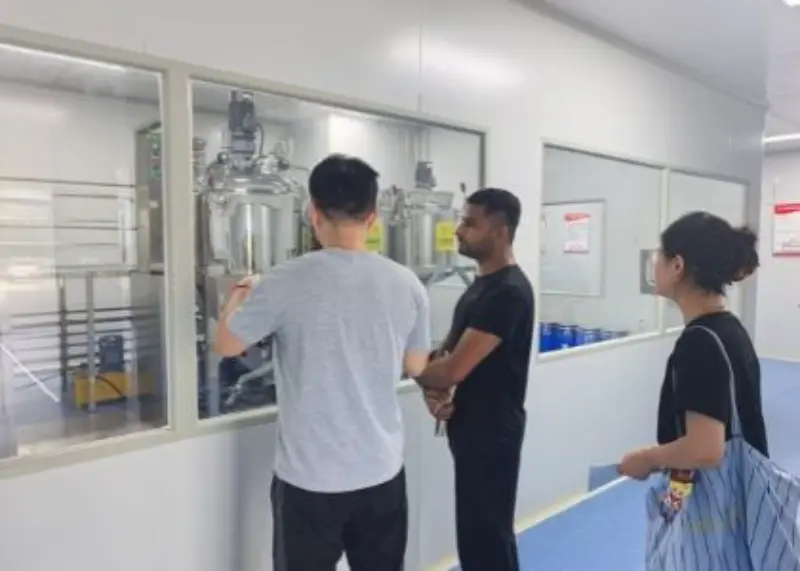
Verify the facility, on site or on video
A physical visit is the strongest form of verification, but it is not always practical. In that case, a live video walkthrough of the facility is the next best option, arranged by you or your agent, not a pre-recorded marketing video the supplier chose to send. During a visit or video call, look for:
- Production lines actually running, with workers and materials consistent with your product.
- A quality-control area or process, incoming material checks, in-line inspection, final inspection records.
- The company name displayed on signage, and whether the environment matches the scale the supplier claims.
One visit confirms the situation on that day only. For larger orders, buyers often arrange a separate pre-shipment inspection rather than relying on a single visit.
Evaluate samples properly
A sample is a preview, not a promise, but skipping it is worse. When you receive samples:
- Confirm the sample matches your specification in every detail that matters: dimensions, materials, finish, function, packaging.
- Ask whether the sample was made on the actual production line or hand-made as a one-off. The difference affects what mass production will look like.
- Keep a sealed, signed reference sample. If a later shipment differs, you have a baseline to point to.
- Clarify who pays for samples and sample shipping, and what happens if the sample needs revisions.
Test quotation consistency
The quotation itself is a verification tool. Request a formal proforma invoice with the full company name, address, product specifications, unit prices, total, Incoterms, lead time, and payment terms. Then check consistency:
- Company name matches the business license and the bank account name.
- Contact details (phone, email domain) belong to the company, not a free email service used as the only channel.
- Terms are written and specific, not vague promises over chat messages.
Large, unexplained price differences between suppliers for the same specification deserve questions, not celebration. An unusually low quote sometimes means a different specification, a different factory, or a price that will rise after the deposit.
Use payment safeguards
- Avoid paying 100% in advance to a supplier you have never worked with. A common structure is a deposit with the balance tied to shipment or inspection, agreed in the contract.
- Pay to the company’s official bank account, in the company’s registered name, never to a personal account or a different company without a documented reason.
- For larger first orders, consider payment instruments that add a layer of protection, such as a letter of credit, and discuss the option with your bank.
- Keep every term that matters, specifications, delivery date, penalties for delay, defect remedies, in the written contract, not in chat history.
Consider a small trial order
When the product and supplier allow it, a small trial order is one of the most informative checks available. It tests the full chain, communication, production, quality control, packing, documentation, and shipping, at limited risk. A supplier who performs well on a trial has demonstrated something no certificate can show.
An honest caveat
Important: no checklist eliminates risk. Verification reduces the probability of problems; it does not remove it. Suppliers can change factories, substitute materials, or simply have a bad month. Written contracts, milestone-based payments, and pre-shipment inspection are how experienced buyers manage the risk that remains after verification is done.
Reading a Chinese business licence
Every legally registered company in mainland China has a business licence with a unified social credit code, an 18-character identifier that stays with the company. The licence also shows the registered Chinese name, the legal representative, the registered capital, the date of establishment, the registered address and the business scope.
The registered Chinese name is the one that matters legally. English trading names can be chosen freely and are not always linked to the registered entity. You can check the code and name against the National Enterprise Credit Information Publicity System, which also shows whether the company is in normal operation or has abnormal records.
| Licence field | What to check |
|---|---|
| Unified social credit code | Matches the official record for the same company name |
| Registered Chinese name | Matches the contract and the name on the receiving account |
| Business scope | Includes manufacturing or the product you are buying |
| Date of establishment | Very new companies deserve closer checks |
| Registered address | Matches, or is close to, the factory you were shown |
| Operating status | Normal operation, with no abnormal or deregistered status |
Verify Chinese supplier documents: a checklist
When you set out to verify Chinese supplier claims, ask every shortlisted candidate for the same set of documents. How quickly and clearly they respond is part of the evaluation.
- Business licence, as a clear photo or scan, including the unified social credit code
- Export details: whether the company exports in its own name or through an agent
- Product certificates and test reports for your market, showing the lab and the date
- Recent photos or video of your type of product on the production line
- A quality procedure summary: incoming materials, in-process checks and final inspection
- A sample invoice or proforma showing the registered company name
Check that the company name is the same on every document. A certificate issued to a different company, or for a different product, does not cover your order.
Check certificates properly
Certificates and test reports are easy to copy and edit. Look for the issuing laboratory's name, a report number, the product name and model, the applicant company and an issue date. Where the laboratory offers an online check, use it. A report that names a different company or an older version of the product is a reason to ask questions, not a reason to proceed.
Look at the online footprint
A supplier's online presence can support or contradict what it tells you. Compare the company name on its website and marketplace profiles with the business licence, check how long the profiles have existed, and look for product photos that also appear on many unrelated listings. None of this proves anything on its own, but inconsistencies are worth raising before you pay.
Match the depth of checks to the risk
| Order situation | Suggested checks |
|---|---|
| Small trial of a stock product | Licence and registry check, plus a video call |
| First bulk order with a new supplier | Registry check, documents, samples and a site visit or live walk-through |
| Custom or OEM product | All of the above, plus checks on equipment and tooling capability |
| Existing supplier with changed company details | Fresh registry check and written confirmation of the change |
| High-value order | Full checks, a factory visit, and inspection before the balance |
The aim is proportion. A small trial does not need a full audit, but a large first order with an unknown factory should never rely on a marketplace profile alone.
Common explanations, and how to respond
- "Our factory is too busy for a video call." Offer a short call at another time. A real factory can usually find ten minutes.
- "Please pay our sister company." Ask for the arrangement in writing on the contract, and verify the second company as well.
- "The certificate is under our partner's name." Ask which company makes the product, and verify that one.
- "The price is low because we have extra stock." Ask for photos of the actual stock and a sample from it.
Some of these explanations are genuine. The point is not to reject them automatically, but to verify Chinese supplier explanations with evidence before money moves.
Before the first transfer
The first payment is the point of highest risk, so confirm a few simple things just before it is made. The receiving company name should exactly match the registered name on the licence and the contract. Any last-minute change to the receiving details should be confirmed by a call to a contact you already know, not by replying to the same message that announced the change. Keep the contract, proforma invoice and transfer confirmation together for every payment.
Where possible, link the balance payment to a named event, such as passing an agreed inspection, rather than to the supplier saying goods are ready. This keeps leverage on your side until you have evidence that the order is right.
After you have verified a supplier
Verification is not permanent. Companies change ownership, move sites, change bank arrangements and take on new partners. Repeat the basic registry check before each large order and whenever company details change. Keep a simple file for each supplier with the date of each check, what was confirmed and any open questions, so the next check is quick.
When to ask for help
If you cannot visit China, cannot read Chinese documents, or are placing a large first order, a local partner can carry out these checks for you. VECTA GLOBAL offers verification as a stand-alone service or as part of a full sourcing project. See Supplier Verification for what is included.
Questions to ask on a factory call
- Can you show me the line that would make my product, running now?
- Which machines or processes does my specification need, and do you have them in-house?
- Which parts or materials do you buy from other suppliers?
- How do you check incoming materials and finished goods?
- What is your current capacity, and how busy are you in the coming months?
- Which markets do you already export this product to?
Write down the answers and compare them across suppliers. Clear, specific answers from staff who know the process are a strong sign; vague replies or reluctance to show the line are worth noting.
A note on trading companies
Finding out that a supplier is a trading company is not a reason to stop. Many add real value. What matters is that you know, so you can judge price, control and responsibility correctly, and so you can decide whether you also want the factory behind it checked.
Finally, write down what you checked and when. A one-page record for each supplier, with the registry result, the documents received, notes from the call and any open questions, turns verification from a one-off task into a habit that protects every future order.
Need help verifying a supplier?
Send the supplier details you have, and we will help you verify Chinese supplier claims before your first payment.